We offer a 120-day trial period for unused products.



How to Measure a Suitcase Correctly: The Ultimate Guide for Stress-Free Travel
Planning a trip is an exciting endeavor, but it often comes with a fair share of logistical hurdles. One of the most common stressors for travelers is ensuring their luggage meets strict airline requirements. Whether you are a frequent flyer or a seasonal vacationer, knowing how to measure suitcase dimensions correctly is the difference between a smooth check-in and paying hefty oversized baggage fees at the gate.
In this comprehensive guide, we will walk you through the step-by-step process of measuring your luggage, explain the difference between linear and dimensional measurements, and share tips on how to maximize your packing space.
Why Accuracy Matters in Luggage Measurement
Airlines have become increasingly strict about luggage sizes to optimize cabin space and fuel efficiency. A suitcase that looks "small enough" to you might be an inch too wide for the overhead bin, resulting in an unexpected $50 to $100 gate-check fee.
Beyond the financial aspect, knowing your suitcase’s exact dimensions helps you:
- Avoid Last-Minute Panic: No one wants to be the person frantically trying to shove a bulging bag into a metal sizer at the airport.
- Maximize Efficiency: When you know exactly how much space you have, you can pack smarter.
- Protect Your Gear: Using a bag that is the right size prevents overstuffing, which is a leading cause of luggage damage.
The Tools You’ll Need
To get an accurate reading, you don’t need high-tech equipment. A simple setup will suffice:
- A flexible measuring tape (the kind used for sewing is best, but a standard hardware tape measure works too).
- A flat surface or a wall to lean the suitcase against.
- A notebook or smartphone to record the numbers.
- A luggage scale (optional but highly recommended).
Step-by-Step: How to Measure Suitcase Dimensions
When you measure suitcase dimensions, you aren't just measuring the fabric shell. Airlines measure the total exterior dimensions, which include all protruding parts.
1. Measure the Height (Vertical)
Place your suitcase upright on its wheels. Measure from the very bottom (the floor) to the top of the suitcase.
Crucial Tip: Make sure the telescoping handle is fully retracted and pushed down. Include the wheels and the top carry handle in your measurement. This is where most travelers make a mistake—they only measure the body of the bag, forgetting that wheels can add 2 to 3 inches.
2. Measure the Width (Horizontal)
Turn the suitcase so you are looking at it from the front. Measure across the widest part of the suitcase.
Crucial Tip: If your bag has side handles or plastic bumpers, ensure the tape measure goes over them.
3. Measure the Depth (Side View)
Measure the suitcase from the front to the back.
Crucial Tip: This is the measurement most likely to change depending on how much you pack. If your suitcase has an expansion zipper, measure it both while closed and while fully expanded so you know your limits.
Understanding Linear Inches: The Secret Airline Metric
Many airlines, especially for checked baggage, use a metric called "Linear Inches." If an airline states a limit of 62 linear inches, they are referring to the sum of your measurements: Length + Width + Depth.
For example, if your suitcase is 28 inches tall, 18 inches wide, and 12 inches deep:
28 + 18 + 12 = 58 linear inches.
In this case, you would be safely under the 62-inch limit.
Choosing the Right Bag for Modern Travel
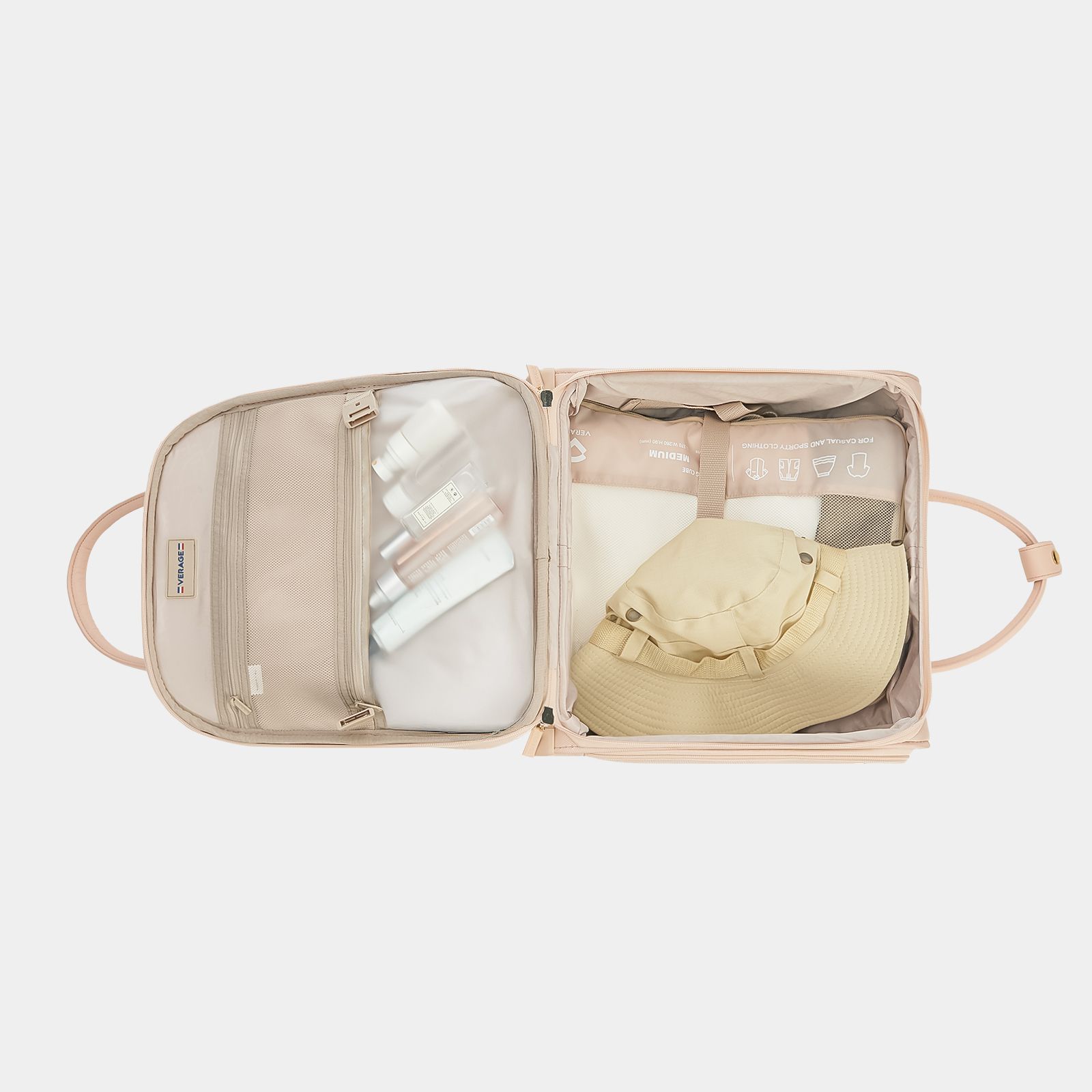
If you are tired of the "will it fit" guessing game, the best solution is to invest in a bag designed specifically to meet international standards. For those who prefer to keep their essentials within arm's reach, the GlideElle Underseat Carry-On is an exceptional choice. It is engineered to maximize every millimeter of allowed space while fitting comfortably under most airline seats, ensuring you never have to worry about overhead bin availability again.
Common Pitfalls to Avoid
Ignoring the "Stuff Factor"
A soft-sided suitcase is flexible. When you pack it to the brim, the sides bulge. Even if the empty suitcase meets the 9-inch depth requirement, a stuffed bag might measure 11 inches. Always measure your suitcase after it is packed.
Forgetting the Wheels
As mentioned earlier, "spinner" wheels (the ones that rotate 360 degrees) stick out significantly. Modern airline sizers are boxes; if the wheels don't fit in the box, the bag doesn't go on the plane. Always include them in your height calculation.
Weight vs. Size
Size is only half the battle. Almost every airline has a weight limit. A perfectly sized carry-on that weighs 40 lbs might still get forced into the cargo hold on a weight-restricted flight. Use a digital luggage scale to ensure you’re within the 15lb–22lb range typical for carry-ons.
Domestic vs. International Standards
It is important to note that "Standard Carry-on Size" is a myth. Every airline is a kingdom unto itself.
- US Domestic Carriers (Delta, United, American): Generally allow 22 x 14 x 9 inches.
- Budget Carriers (Spirit, Frontier, Ryanair): Often have smaller "Personal Item" requirements (18 x 14 x 8 inches) and charge for anything larger.
- International Carriers (Lufthansa, Air France): Often use centimeters and have stricter weight limits (sometimes as low as 7kg/15lbs).
Always check the specific airline's website 24 hours before your flight, as policies can change without notice.
Tips for Reducing Luggage Bulk
If your measurements are coming in slightly over the limit, don't buy a new bag just yet. Try these tricks:
- Compression Straps: Use internal and external compression straps to "thin out" the depth of the bag.
- Wear Your Heavy Items: Wear your bulkiest jacket and heaviest boots onto the plane.
- Vacuum Bags: These are great for reducing the volume of clothes, though they don't reduce weight.
- The "Squish" Test: If you have a soft-sided bag, ensure it isn't packed so tight that it loses its ability to be compressed into a sizer.
Summary Checklist for Measuring Your Suitcase
To ensure you measure suitcase dimensions like a pro, follow this quick checklist before you head to the airport:
- Suitcase is fully packed and zipped.
- Measuring from the floor to the top of the handle (Height).
- Measuring the widest point including side handles (Width).
- Measuring the thickest point including external pockets (Depth).
- Sum of H + W + D calculated (Linear Inches).
- Total weight verified with a scale.
Conclusion
Mastering the art of luggage measurement is a vital skill for the modern traveler. By taking five minutes to measure suitcase dimensions at home, you save yourself time, money, and stress at the airport. Remember to account for wheels, handles, and the "bulge" of your clothes.
Whether you are carrying a large checked bag or a compact underseat companion from VERAGE, being informed is the key to a seamless journey. Safe travels, and may your luggage always fit in the overhead bin!




© 2024 VERAGE Powered by Shopastro
Last Updated2026-07-16