We offer a 120-day trial period for unused products.


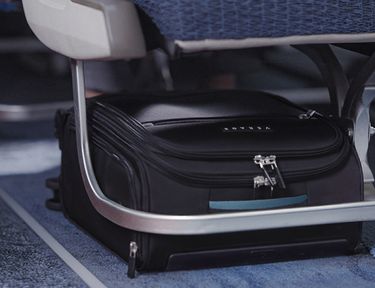
How Strict Are Airlines About Underseat Size?
If you’ve ever stood at the airport wondering whether your underseat luggage will actually fit beneath the seat in front of you, you’re not alone. With airlines tightening personal-item rules and travelers trying to maximize every inch of space.
This guide breaks down what airlines really check, how they measure the size of luggage, what happens if your bag doesn’t fit, and how you can choose the right underseat luggage without stress.
What Does “Underseat Size” Actually Mean?
Most airlines allow one personal item that must fit completely under the seat, which usually means a smaller bag than your standard carry-on luggage. While each airline has its own specific measurements, the idea is the same: the bag must slide under the seat without blocking foot space, emergency areas, or the aisle.
Why Airlines Care About the Size of Luggage for Underseat Items
- Safety during takeoff and landing
- Aircraft design and limited under-seat height
- Compliance with international aviation rules
- Faster boarding and less overhead bin competition
Even though it feels like micromanagement, airlines enforce these luggage dimensions to ensure a smoother, safer trip.
How Strict Are Airlines Really About Under Seat Size?
Here’s the honest answer:
Most airlines are moderately strict — but strictness varies based on the airline, the aircraft, and the gate agent. Some airlines hardly check underseat luggage unless it’s obviously oversized. Others measure aggressively, especially budget airlines that charge for overhead-bin use.
Why Underseat Rules Feel Confusing
Different airlines use different aircraft, and the size of luggage allowed depends heavily on the plane’s interior layout. A bag that fits easily on a Boeing 777 might not fit under the seat of a small Airbus A319.
Common size ranges for underseat items:
- 14” × 10” × 8” (strict carriers)
- 17” × 13” × 8” (standard domestic airlines)
- 18” × 14” × 8” (international long-haul airlines)
To make things more complicated, some airlines measure the wheels and handles as part of the size of luggage, while others don’t.
Do Airlines Measure Underseat Luggage at the Gate?
Not always — but they can.
When Airlines Are More Likely to Check
- Your flight is full
- You’re boarding late
- You’re flying a budget airline
- You’re carrying two bags
- Your bag looks bulky or rigid
The overhead bins are full, and gate agents must enforce rules
When Airlines Rarely Check
- Early morning flights
- Flights with many open seats
- You travel with soft, compact underseat bags
- You board early
But here’s something most travelers don’t know: Gate agents visually assess your bag first; If your underseat luggage looks like it will fit, they often won’t bother.
What Happens If Your Bag Doesn’t Fit Under the Seat?
Three things can happen:
1. You’ll Be Asked to Place It in the Overhead Bin
This is the most common and usually not a big deal — unless you’re on a budget airline, where overhead access costs extra.
2. You Pay a Gate Bag Fee
On carriers like Spirit or Ryanair, this fee can be $65–$100.
3. The Bag Gets Checked at the Gate
If the bin space is full or your bag is oversized, the airline may check it. This is usually free on major airlines but can be costly on low-cost carriers. This is why choosing the right underseat luggage matters more than ever.
How to Choose Underseat Luggage That Airlines Approve
If you want zero stress at the airport, look for these features:
Soft-Sided Structure
Soft materials compress and adapt to under-seat limitations better than hard-shell designs.
Expandable Design
Some flights give you flexibility; others don’t. Expansion lets you adjust the size of luggage depending on the airline.
Lightweight Frame
Airlines often have weight limits for carry-on luggage, even if they don’t always enforce them.
Laptop Compartment
If you work on the go, a padded space for devices makes travel easier.
Two-Wheel or Compact Roller Design
Fits better under seats compared to 4-wheel hard-shell spinners.
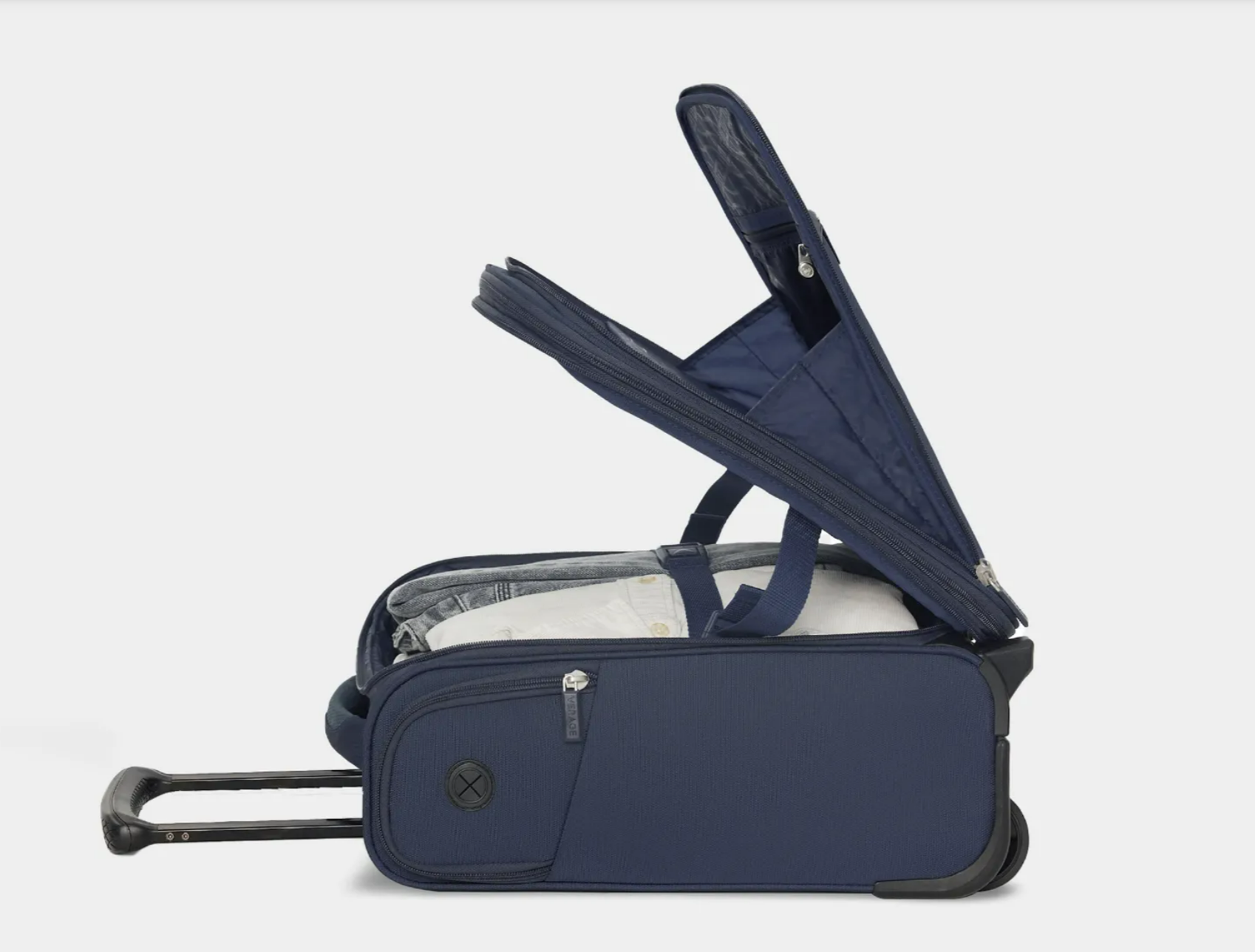
A Smart Option for Travelers: Verage Visionary Rolling Underseat Carry-on Luggage
If you’re looking for an underseat bag that consistently fits on most airlines while giving you maximum packing space, the Verage Visionary Rolling Underseat Carry-on Luggage is worth considering.
It’s designed specifically to meet under-seat size requirements, with:
- A compact frame that fits under most economy seats
- An expandable layer for flights that allow more room
- A 16-inch padded laptop compartment
- Plenty of organized storage for short business trips or weekend flights
It’s a solid choice if you want to avoid gate-check surprises while traveling efficiently.
Common Questions Travelers Ask About Underseat Size
“Can I use a small carry-on luggage as my personal item?”
Only if it fits under the seat. Regular carry-on luggage is usually too tall or too rigid.
“Does underseat luggage include wheels?”
Yes. Most airlines count the wheels and handles when measuring the size of luggage.
“Is a backpack better than underseat luggage?”
Backpacks are more flexible, but underseat rollers offer better protection and more organized packing.
“Do international airlines enforce underseat size more strictly?”
In general, no. International flights tend to allow slightly larger personal items, but it depends on the plane.
“How can I make sure my bag fits under the seat?”
Measure your bag at home — height, width, depth, including wheels. Then compare it to your airline’s specific size chart.
Tips to Ensure Your Underseat Luggage Always Fits
Avoid stuffing your bag until it bulges
Overpacking increases the size of luggage beyond allowed limits.
Board early
This ensures you find space.
Check your aircraft type
Small regional planes have very limited under-seat space.
Use soft, structured underseat luggage
It compresses better and avoids measurement issues.
Final Thoughts: Airlines Aren’t Always Strict, but You Must Be Prepared
If your bag fits comfortably under the seat, most airlines won’t bother you. But if your bag looks oversized or the flight is full, regulations may be enforced tightly.
A well-designed underseat bag — especially one built with flexible sizing — gives you the freedom to travel confidently without worrying about measurements, unexpected gate fees, or last-minute checks. Focus on the right dimensions, pack smart, and choose luggage that adapts to different airlines. When you do that, your travels become smoother, lighter, and stress-free. Welcome to visit Verage' s collection to get more information.




© 2024 VERAGE Powered by Shopastro
Last Updated2026-09-17